












How to Propagate Plants in Water: A Simple Beginner’s Guide
One of the simplest methods for growing new plants from cuttings is to propagate plants in water. A container, some water, a clean pair of scissors, and a healthy plant are all you need.
Better yet, it can be surprisingly fulfilling to watch roots grow in a clear glass.
Water propagation is extremely simple. You don’t need a variety of gardening supplies, and the setup is easy. In fact, you might already have nearly everything you need if you have a glass and a healthy houseplant in your kitchen.
Here’s how to propagate houseplants in water if you’ve never done it before, along with some of the simplest plants to start with.
Read Also: Indoor plants that grow in water
What is water propagation?
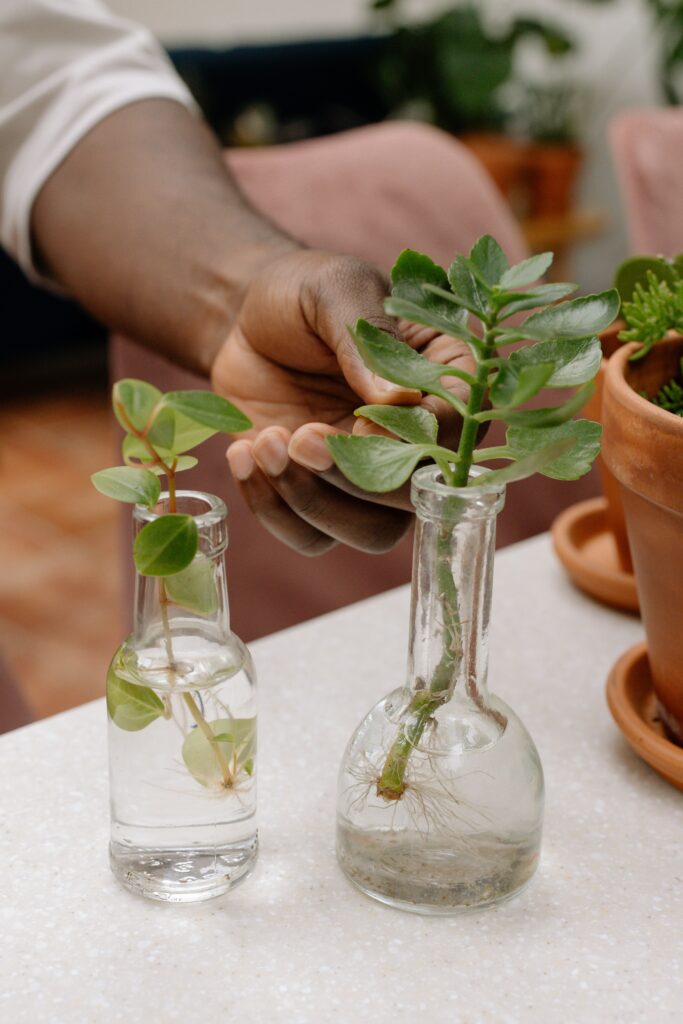
Growing a new plant from a cutting by submerging a portion of the stem in water until it forms roots is known as water propagation. You can transfer the cutting into soil once the roots are firmly established.
Because you can actually see what’s going on beneath the surface, it’s one of the simplest plant propagation techniques for beginners. You can actually see roots emerge thanks to water propagation whereas with soil propagation, you have to wonder whether the roots have formed yet or not.
Everything You’ll Need to Grow Plants in Water
Frankly, not much is required. Here are the things that I use:
A healthy houseplant
Pruning shears or clean scissors
A small jar or glass
Fresh Water
A bright area that receives indirect sunlight
That’s all!
You can begin with something as basic as a glass of water.
How to Propagate Houseplants in Water
1. Begin with a Plant That Is Healthy
I always advise starting with a plant that is thriving and in good health. If possible, avoid taking a cutting from a struggling plant.
Make sure the stem is healthy and has multiple leaves. You might be able to take multiple cuttings from a single stem if your plant has long vines.
2. Search for a Node
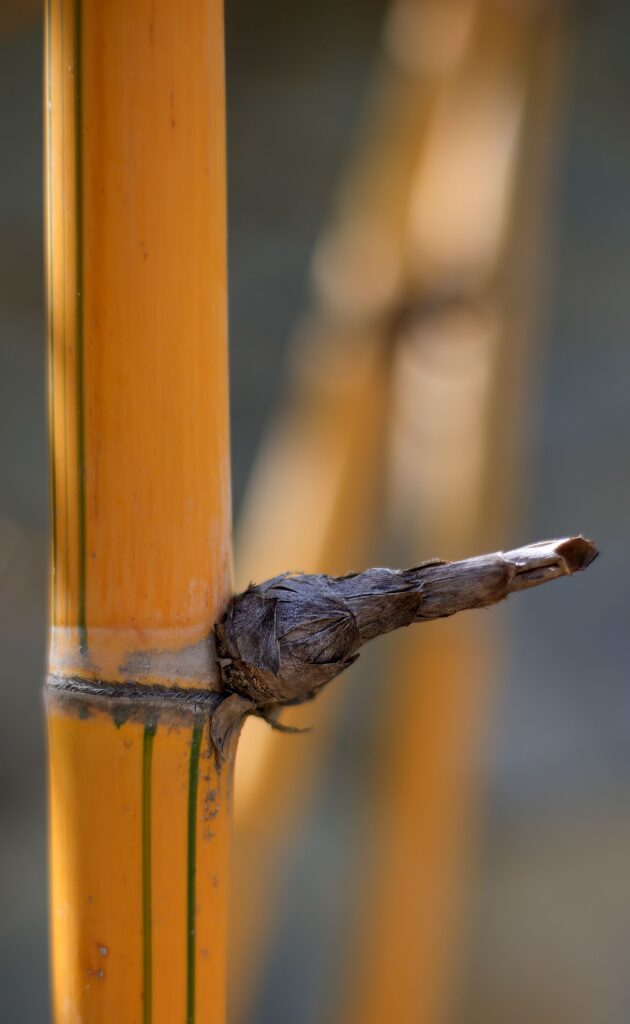
When learning how to propagate houseplants in water, this is probably the most crucial step. You must search for a node.
The small section of the stem where a leaf grows is called a node. You might also notice a small bump or aerial root growing there, depending on the plant. Roots can grow from here.
Don’t just chop off a leaf and hope it grows into a new plant. A node must be present in your cutting for many common houseplants.
3. Make a Cut
Once you’ve located a healthy section of stem, cut just below the node with clean scissors.
Although the ideal size can vary depending on the plant, I usually like to take a cutting that is about 4-6 inches long. Don’t worry about making it flawless.
Having a healthy cutting with a viable node is crucial.
4. Take Out the Lower Leaves
Remove the leaves from the lower portion of the stem before submerging your cutting in water.
The leaves shouldn’t be submerged as they may begin to attract fungus and contaminate the water.
Remove the leaves that would be submerged, leaving a few healthy leaves at the top of the cutting.
5. Submerge the Cutting in Water
Put your cutting in a clean glass or jar filled with water.
Make sure the leaves stay above the water and only the node is submerged.
I believe that using a clear glass is particularly helpful for this reason. The precise location of the cutting is visible, and you will eventually be able to observe the roots growing.
6. Find a Bright Area
Put your cutting in an area with indirect, bright light. Although I wouldn’t leave it in an area that receives a lot of direct sunlight throughout the day.
As long as the cutting isn’t in direct sunlight, a bright spot next to a window can work well.
As the plant grows roots, light helps the plant to grow better.
7. Replace the Water
It’s easy to forget this step.
Don’t simply submerge your cutting in water and forget to check it for weeks. Watch the water and replace it if it gets dirty or murky.
If I see any buildup, I also like to remove the plant, quickly clean the container and replace with fresh water.
The cutting has a far better environment for root development when it is submerged in fresh, clean water.
8. Have patience
For me, this is probably the most difficult part.
It’s very tempting to keep checking the cutting after you’ve submerged it in water. However, plants don’t follow our timetable.
While some cuttings take much longer, others can begin to grow roots in a week or two.
If you don’t see roots right away, don’t give up. Give the cutting some time if it still appears healthy.
Read Also: How to Style Indoor Plants at Home
How long does it take for cuttings from houseplants to take root in water?
There is no single answer to this question.
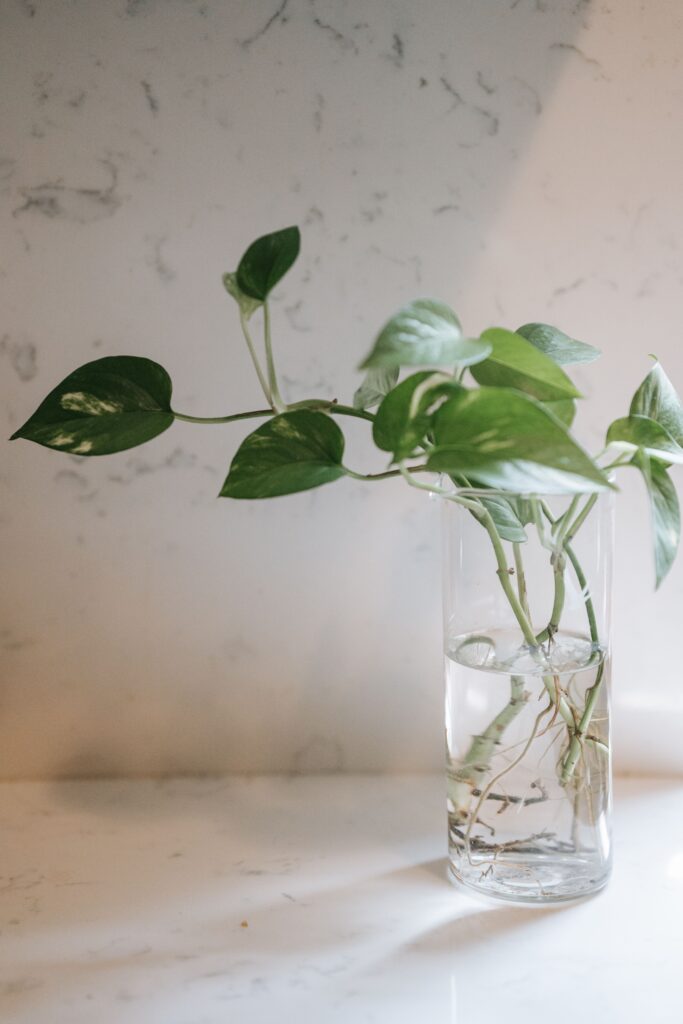
While some cuttings seem to take an eternity to root, others do so rather quickly.
After a few weeks, you might begin to see roots, but it might take longer depending on:
The kind of plant
The cutting’s condition
Lighting conditions
The temperature
Quality of water
Season
Therefore, if your cutting hasn’t rooted after a few days, don’t freak out.
Give it some time.
My Favorite Houseplants to Propagate in Water
- Pothos
- Monstera
- Spider plant
- Snake Plant
When Can you put a Cutting into Soil?
When you see one tiny root, I wouldn’t immediately move a cutting into the soil.
I would rather hold off until the cutting has developed a stronger root system.
You can carefully move the plant into a small pot with drainage holes and well-draining potting soil once you have multiple healthy roots.
While it adjusts, give it a little water and place it in an area with bright, indirect light.
Give it some time to settle because a cutting that has been growing in water is moving into an entirely different environment.
One of the simplest ways to begin propagate new plants, in my opinion, is water propagation.
The fact that it doesn’t require a lot of space, money, or gardening expertise is what makes it so appealing.
You can just watch what happens when you put a small cutting from a plant you already own in a glass of water.
And if you’re anything like me, you’ll probably find yourself checking the glass every few days to see if those tiny roots have emerged.


Leave a Reply