












Baby Wake Window Activities (0–12 Months): Age-by-Age Ideas for Play and Development
Before I became a mom, I thought that caring for my newborn baby was a simple cycle of feeding, changing, cuddling and sleeping. While that was the case in the first few weeks, as time went by, I noticed him staying awake for longer stretches. I did my research and found that as the weeks go by, my baby’s wake window increases and that led me to wonder, “What am I supposed to do with him while he’s awake?”
I could just wait until his next nap but at the same time I wanted to do as much as possible to support his development. Most parents think they need to constantly keep their baby entertained and buy a room full of expensive toys. The truth is, simple activities like singing to them or reading a story, taking a walk can help them bond, explore and learn.
If you’re wondering how to make the most of your baby’s wake windows, I will be sharing activities from birth to 12 months that are fun, engaging, and great for your baby’s development.
You may also like: Things I wish I knew before becoming a mother

What are Wake Windows?
Basically, a wake window is the amount of time your baby stays awake between naps.
During, a wake window, a baby
- Feeds
- Has a diaper change
- Plays or interacts
- Learns new skills
You don’t have to ensure your baby is doing something at all times, allow the baby to explore on its own. This can avoid overstimulation, a common cause of fussiness.
Activities you can do during the wake window
Newborn(0-2 months)
Wake Window: 30-45minutes
In the newborn phase, most of the time of your baby’s wake window is spent feeding and changing diapers, leaving only a couple of minutes for gentle interaction.
Talking
Your baby loves looking at your face. It is important to smile and talk gently and slowly while maintaining eye contact.
Tummy time
According to Science Insights, a baby can start tummy time a couple of days after birth. Benefits of tummy time include increased strength in the neck and shoulders and back muscles. Although in my own experience, I started tummy time at two months, 1-2 minutes several times a day.
Gentle Singing
Your voice is familiar to the baby as they remember it from the womb. You can sing some lullabies or nursery rhymes.
Walking while talking
Take your baby around the house for a bit and describe to them everything around like, “Here’s the window”. This can be helpful for your baby to develop his language early.
2-4 months
Wake Window: 90 minutes
After 2 months, your baby is no more considered a newborn. They become more alert and curious. At this stage, communication is very important. Describing things around help the baby develop their speech early. By 4 months, they begin smiling and showing expressions. You can do more activities with them like
- Read short board books
- Practice reaching for toys
- Listen to soft music
- Tummy time with toys
- Gentle dancing together
- Texture exploration
- Follow colorful rattles with their eyes
You may also like: Side Hustles for busy moms during nap time
4-6 months
Wake Window: 2-3 hours
By 4-6 months, your baby may begin rolling over and reaching out for things. This is actually the best time, if you want to travel with your baby, since they are still on breastmilk/formula and are asleep a lot. At this stage, do not deprive them from touching things or putting things in their mouth as this is part of their development. Instead, allow them to explore with safe objects. Choose items with different textures like:
- Silicone spoon
- Washcloth
- Soft ball
- Plastic bowl
Some of the other activities you can do during your baby’s wake window are:
- Peekaboo
- Helping them sit with support
- Story time
- Action songs
6-9 months
Wake Window: 3-3.5 hours
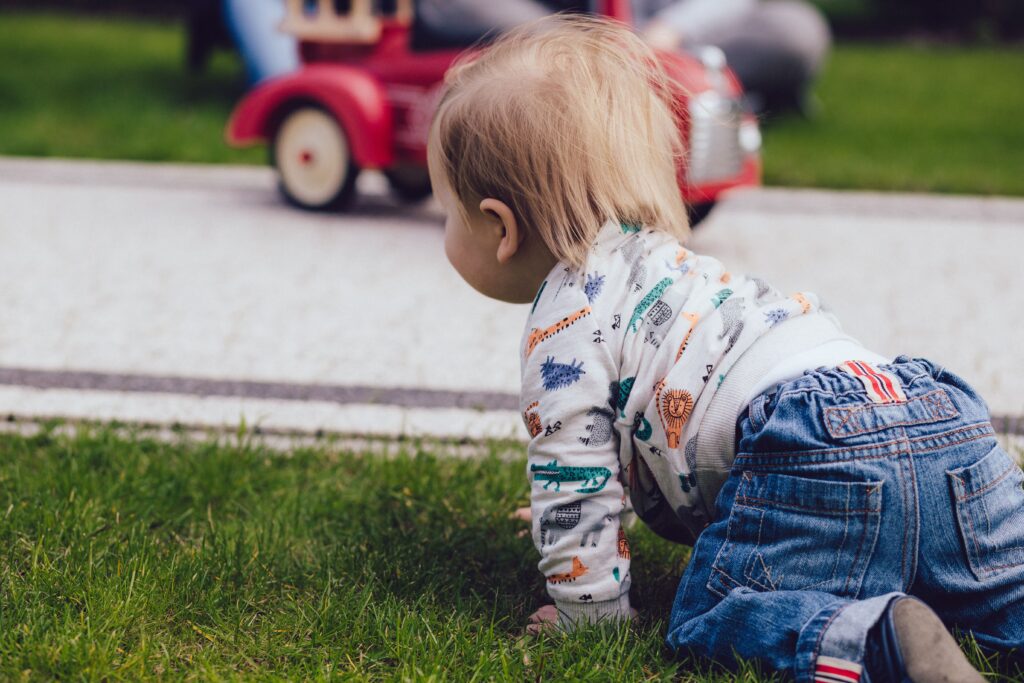
By now, your baby is becoming much more active and curious about the world around them. By the end of this stage, they may be sitting independently, crawling, pulling themselves up, or attempting to stand with support. This is an exciting stage because your baby learns best through movement and exploration. Some of the activities you can do during this phase are:
Create a Crawling Obstacle Course
Once your baby starts crawling, encourage them to explore by creating a simple obstacle course.
You can use:
- Cushions
- Folded blankets
- Pillows
- Cardboard boxes
Place a favorite toy just out of reach to motivate your baby to crawl. This activity strengthens their arms, legs, core muscles, and coordination while building confidence.
Practice Standing
If your baby is beginning to pull themselves to a standing position, provide sturdy furniture they can safely hold onto, such as a couch or table.
Place interesting things like their favorite toy or a pacifier on the surface to encourage them to stand and explore.
Read Interactive Books
Your baby is becoming more interested in books and may enjoy turning pages or pointing at pictures.
Choose books with:
- Bright illustrations
- Different textures
- Lift-the-flap pages
- Simple rhymes
- Animal sounds
Point to each picture and name it.
For example:
“Look! That’s a puppy. Can you hear the puppy? Woof woof!”
This helps build vocabulary long before your baby begins talking.
Music and Movement
Babies love music at this age.
Play nursery rhymes or your favorite songs and encourage your baby to:
- Clap their hands
- Bounce to the beat
- Tap two spoons together
- Bang on a toy drum
Music supports rhythm, coordination, listening skills, and language development.
9-12 months
Wake Window: 3.5-4 hours
Between 9 and 12 months, your baby may achieve exciting milestones like crawling quickly, pulling up to stand, taking their first steps, waving goodbye, clapping, and even saying their first words.
Once your baby’s wake window reaches 3.5-4 hours, they have a higher attention span which means they can focus on activities and explore how things work. At this age, your baby’s favorite toy is often whatever you’re using, so don’t be surprised if they’re more interested in your kitchen spoons than their expensive toys!
Practice Walking
If your baby is pulling up, give them plenty of safe opportunities to practice.
Encourage movement by placing favorite toys just a short distance away.
You can also:
- Hold both of their hands while they walk
- Let them push a sturdy walker
- Create a safe space with plenty of room to move
Remember that some babies walk before their first birthday, while others don’t take their first independent steps until several months later. Both can be completely normal.
Read Interactive Books Together
Reading becomes even more enjoyable at this age.
Choose books with:
- Flaps to lift
- Different textures
- Large colorful pictures
- Simple stories
- Animal sounds
Ask questions as you read:
“Where’s the dog?”
“Can you point to the ball?”
Even if your baby can’t answer yet, they’re learning to connect words with objects.
Reading together every day also helps build a lifelong love of books.
Pretend Play
Around this age, babies begin copying what they see adults doing. Encourage imaginative play with simple household or toy items such as:
- Toy telephones
- Toy kitchen utensils
- Stuffed animals
- Baby dolls
- Toy cups and plates
Pretend to:
- Drink from a cup
- Feed a teddy bear
- Brush a doll’s hair
- Talk on a toy phone
Your baby may start copying these actions, which supports social and cognitive development.
As your baby grows, you’ll notice that their wake windows become more than just the time between naps—they become opportunities to bond, learn, and create lasting memories together.
While it can sometimes feel like you need to constantly entertain your little one, the truth is that babies learn best through simple, everyday interactions with the people they love most.


Leave a Reply